SMART MONEY DIASPORA

Build wealth beyond borders. Create a legacy that lasts.

Archives September 2026

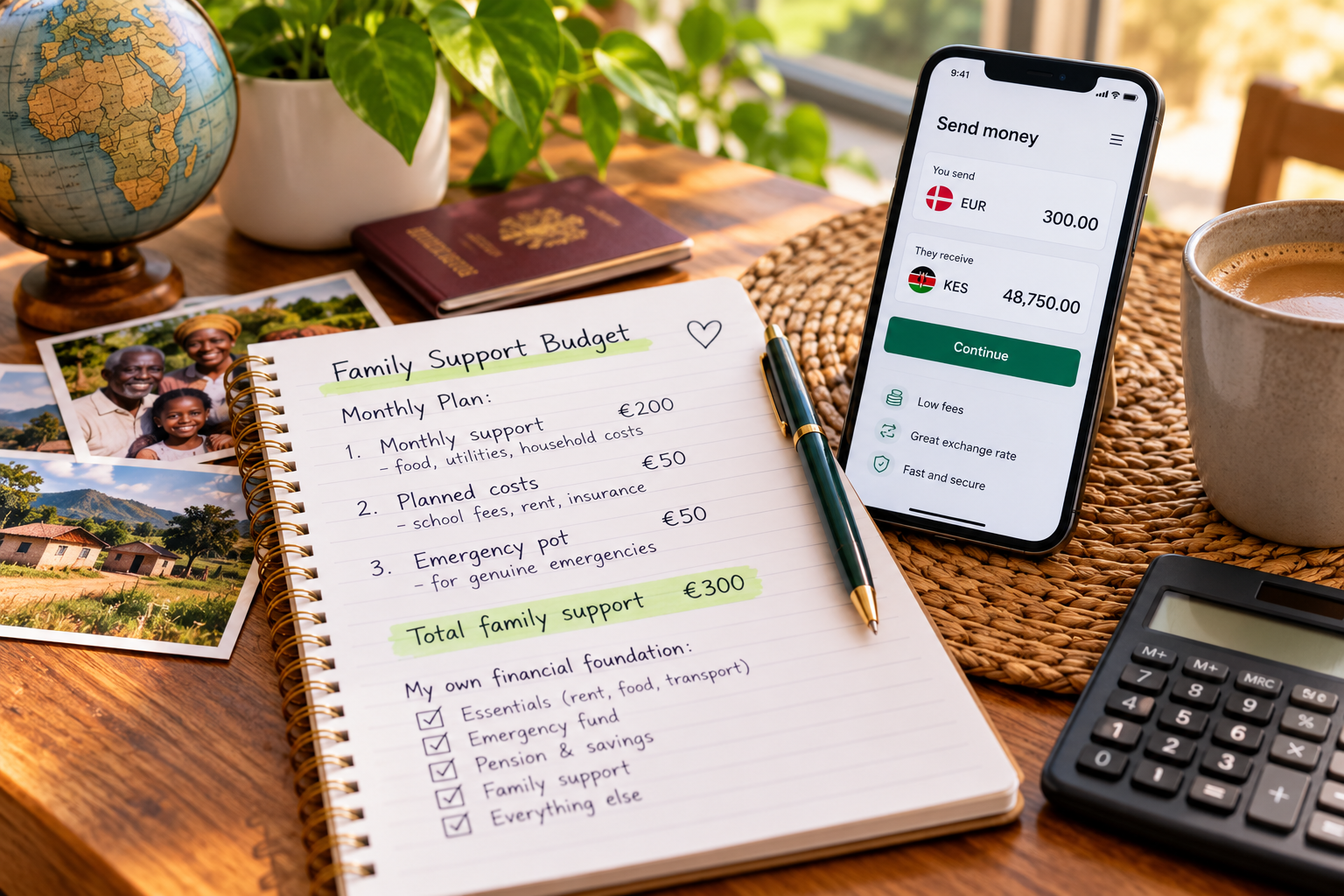
Budgeting a monthly amount to send home to family

How Much Should I Send Home? A Simple Monthly Budget for Family Support

By Martha Muigai · Smart Money Diaspora · Part of the Black Tax series · 6-minute read

It’s one of the most common questions I hear from people living abroad:

“How much should I actually be sending home?”

Usually it’s asked quietly, with a bit of guilt. Because for most of us, the honest answer has been: whatever was asked, whenever it was asked. A message arrives, we send. Another arrives, we send again. And at the end of the month we wonder where our savings went.

In my guide to black tax, I explained why supporting family is part of who we are, and why doing it without a plan can hurt both you and them. This post is the practical part: a simple, four-step way to decide how much to send each month, and how to stick to it without guilt.

Key Takeaways

  • Start with your family’s real monthly gap, not with what’s asked.
  • The gap is not automatically yours alone to fill. Share it.
  • Decide what you can sustain without weakening your own financial foundation.
  • Split the amount into three buckets: monthly support, planned costs, and an emergency pot.
  • Send on a fixed day, pay big bills directly, and review once a year.

Step 1: Find Your Family’s Real Monthly Gap

Before you decide what to send, find out what’s actually needed. Call your family (or whoever manages the household) and fill in a simple worksheet together:

Monthly household cost Amount (local currency)
Food and household items
Rent or housing
Electricity, water, gas
Medical costs and medication
Transport
School costs (spread per month)
Total monthly costs
Minus income they already have (pension, work, rent, farming, other relatives)
= The real monthly gap

That last line is your starting point. Not the loudest request. Not the biggest emergency. The gap.

Two things usually happen when families do this for the first time:

  • The gap is smaller than expected, because planned spending is cheaper than emergency spending, and some costs were being covered twice.
  • Or it’s bigger than expected, and it becomes clear that one person can’t cover it alone. That’s just as valuable to know.

Either way, you’re now working with facts rather than feelings.

Don’t Confuse the Family Gap With Your Responsibility

Here’s the part many of us miss: the family gap is not automatically one person’s responsibility.

Just because you’re the one abroad doesn’t mean the whole gap lands on you. Say the family’s monthly gap is €500. It could be covered like this:

Who contributes Monthly
You €200
A sibling €150
Another relative €100
Extra family income (e.g. selling produce) €50
Total gap covered €500

When you see the gap written down, it becomes much easier to have an honest family conversation about who can contribute what, instead of everyone quietly assuming the person abroad will cover it all.

Step 2: Decide What You Can Sustainably Afford

Now turn to your own budget. The question isn’t “How much can I send this month?” It’s “How much can I keep sending, every month, for years?”

Look at your own monthly budget and cover these first:

  1. Your essentials: rent, food, transport, childcare, insurance, debt repayments.
  2. Your emergency fund: a buffer for your own household.
  3. Your pension and savings: even a small, regular amount.

What’s left after these is your monthly surplus, and that’s where sustainable family support comes from.

This doesn’t mean your family always comes last. Someone supporting an elderly parent with no other income is in a very different position from someone sending money for extras. Sometimes support is essential, and you’ll choose to save less for a while. The principle is simply this:

Protect your financial foundation before you commit to a level of family support you can’t sustain.

If you lose your job with no savings, two households are in trouble instead of one. Protecting yourself protects them.

Your situation Starting point
New abroad, still building your emergency fund A small fixed amount you can sustain
Settled, emergency fund in place An amount that fits your monthly surplus
Established, strong savings and fewer competing obligations A larger amount may be sustainable
Sharing support with siblings or relatives Your agreed share of the actual family gap

There is no universal percentage that every immigrant should send home. The right amount depends on your income, essential expenses, debt, savings, dependants and the actual gap in your family. Don’t send based on what’s asked. Send based on what’s actually needed and what you can sustainably afford.

Step 3: Split It Into Three Buckets

A single lump sum gets spent on whatever is most urgent that week. Splitting your family-support budget into three buckets makes it go much further:

  1. Monthly allowance: sent on a fixed day for everyday living costs.
  2. Planned big costs: school fees, rent due annually, insurance. Saved monthly and paid when due.
  3. Family emergency pot: kept in your account and used only for genuine emergencies.

YOUR FAMILY SUPPORT BUDGET: €300 / month

Bucket Monthly How it’s used
Monthly allowance €200 Sent on the 1st for food, utilities and household costs
School fees fund €50 Saved monthly, paid directly to the school each term
Emergency pot €50 Stays in your account; builds to €600 a year
Total €300 Illustrative family-support budget

The emergency pot is the bucket that changes everything, but only if you use it correctly. The emergency pot is not a second monthly allowance. It’s a separate reserve for genuine, unexpected expenses: urgent medical treatment, a funeral, a serious repair that can’t wait. It isn’t for things that could have been planned, and it isn’t a fund that can be spent whenever someone asks.

Used this way, it protects everyone. When a real emergency arrives, you’re not choosing between your family and your own rent. You check the pot. And if a request isn’t a genuine emergency, or the pot is empty, you have an honest answer ready: “Let’s plan for this next month.”

Step 4: Make It Run Smoothly

  • Send on a fixed day. The same date every month. Your family can plan around it, and you stop getting “is it coming?” messages.
  • Automate it if your transfer provider allows scheduled payments.
  • Compare transfer providers. Fees and exchange-rate margins vary a lot, and a few percent lost on every transfer adds up over a year.
  • Pay big bills directly. Send school fees to the school and hospital bills to the hospital. It’s transparent and removes any pressure on whoever receives the money.
  • Share the load. If siblings or relatives also earn, agree who covers what. One takes school fees, another covers groceries, another handles medical costs.
  • Review once a year, or when your income or their situation changes. A pay rise can mean a little more support; a new baby or job loss on your side can mean a little less.

What to Say When You’re Asked for More

This is the hardest part. A few phrases that keep the door open without breaking your budget:

  • “I’ve already sent this month’s support. Can we plan this for next month?”
  • “Let me check the emergency pot and I’ll come back to you.”
  • “I can’t cover all of it, but I can contribute this much. Can someone else help with the rest?”
  • “I want to keep supporting you for years, not just this month. That’s why I stick to the plan.”

Saying no to one request isn’t saying no to your family. It’s saying yes to being able to help them next year, and the year after.

Frequently Asked Questions

What percentage of my salary should I send home? There’s no universal percentage. The right amount depends on your income, essential costs, debt, savings, dependants and your family’s actual monthly gap. Start with a fixed amount that fits your monthly surplus after your essentials and emergency fund, and review it once a year.

Should I send money home before building my own emergency fund? Send a smaller, fixed amount while you build your emergency fund, then increase it once you have a buffer. Without savings, one job loss puts both households at risk.

How do I handle emergencies if I send a fixed amount? Keep a separate family emergency pot in your own account, topped up monthly. Use it only for genuine emergencies like medical costs, and plan anything else for the following month.

What’s the cheapest way to send money home? Compare providers on both the fee and the exchange rate, since a poor rate can cost more than the fee. Check a few options before every large transfer.

One Plan, Many Years of Support

Sending money home is an act of love. A budget doesn’t take the love out of it. It makes sure you can keep giving, steadily and without resentment, for as long as your family needs you.

And once your monthly budget is in place, the next step is making it lighter: turning part of that support into assets that pay for themselves. I share how I approached this with our family home in Black Tax: What It Is, Why It Exists and How to Make It Sustainable.

Build Wealth. Create Choices. Leave a Legacy.

Get Your Free Diaspora Wealth Checklist

Family support is one of seven areas in my free checklist:

Income → Spending → Emergency Fund → Family Support → Savings → Investments → Wealth Goals

Use it alongside this budget to see how family support fits into your whole financial picture.

👉 Get the Free Diaspora Wealth Checklist

💬 Over to you: do you send a fixed amount home, or do you respond to requests as they come? What’s worked for your family? Tell me in the comments.

Keep reading:

Black Tax: What It Is, Why It Exists and How to Make It Sustainable

 Martha Muigai · Smart Money Diaspora · Part 1 of the Black Tax Series

Supporting family is part of who we are. Doing it without a plan doesn’t have to be.

It usually starts with a message.

“Hope you’re well. Mum’s medicine has run out.” Then another: “The school fees are due on Friday.” And sometimes: “The roof is leaking again.”

If you’re part of the diaspora, you know these messages. You also know the feeling that comes with them: love, duty, guilt and, at times, a quiet panic as you check your balance.

Many of us have a name for this. We call it black tax.

I’ve paid it, and I still pay it. Even so, I don’t believe the answer is to stop. Instead, after years of supporting family from abroad, I’ve learned that how you support your family matters as much as how much. Support without a plan can drain you for decades and still leave your family in the same place. Support with a plan, on the other hand, can make your family more secure and free you to build your own future too.

THE BLACK TAX SERIES

Part 1: Understand Black Tax (you’re here)

Part 2: Create a Family Support Budget

Part 3: Turn a Family Asset Into Income

Part 4: Build Capital That Produces Family Income

Key Takeaways

  • Black tax is the financial support you’re expected to give family once you “make it”, especially when you earn more or live abroad.
  • It exists because of income gaps, missing safety nets and a culture of shared responsibility, not because anyone is greedy.
  • Left unplanned, it can leave both you and your family without security.
  • A sustainable approach moves step by step: understand the need, budget for it, share it, and build assets that help carry the cost.

What Is Black Tax?

Black tax is the money, time and resources that a person who has become financially better off is expected to give to their parents, siblings and extended family.

The term became popular in South Africa, where it describes the pressure on Black professionals, often the first in their family to go to university or earn a steady salary, to support the people who helped them get there. In 2019, the book Black Tax: Burden or Ubuntu?, edited by Niq Mhlongo, brought the debate into the mainstream.

Today, the phrase is used far beyond South Africa, across Africa, the Caribbean and the wider diaspora. In fact, the experience isn’t limited to one race or region at all. Many immigrant families from Asia, Latin America and the Middle East know it well, even if they call it something else.

In practice, black tax can look like:

  • School or university fees for siblings, nieces and nephews
  • Parents’ rent, food, utilities and medical bills
  • Contributions to weddings, funerals and community fundraisers
  • Building or repairing the family home
  • Loans that are rarely paid back
  • Being the answer to every family emergency

It’s called a tax because it can feel compulsory. However, unlike a real tax, there’s no rate, no ceiling and no end date, unless you create one.

Why Does Black Tax Exist?

It’s easy to describe black tax as families being demanding. That isn’t fair, and it isn’t accurate either. Black tax exists for real, structural reasons.

Historical inequality. Colonialism, apartheid and decades of economic exclusion meant many families never had the chance to build wealth that could be passed down. When there’s no inheritance and no family savings to fall back on, the first person to earn a good income naturally becomes the safety net.

Missing safety nets. Here in Denmark, the state covers much of what families elsewhere cover themselves: pensions, healthcare, unemployment support and education. In many of our home countries, however, those systems are limited or unreliable. As a result, the family is the pension, the health insurance and the unemployment benefit.

The income gap. When you earn in euros, pounds or dollars and your family earns in a currency worth a fraction of that, even a small share of your salary can change their month. Because of that gap, the expectation feels natural on both sides.

Sacrifice and gratitude. Many of us are where we are because someone sold land, took a loan or went without so we could study or travel. For that reason, supporting them isn’t only duty. It’s gratitude.

Ubuntu. “I am because we are.” In many cultures, success is shared. Your achievement belongs to the family, and sharing it is part of who you are.

So black tax isn’t simply a burden. It’s also love, loyalty and community. The problem isn’t that it exists. The problem is when it’s unplanned, unlimited and never builds anything lasting.

The Hidden Cost of Unplanned Black Tax

When support has no plan, it quietly costs you, and often your family too.

  • You never build your own safety net. Without an emergency fund, a pension or investments, one job loss puts two households in trouble.
  • Nothing grows. Money that only covers this month’s needs has to be sent again next month.
  • The cycle repeats. If you reach retirement with nothing, your own children may end up paying black tax for you.
  • Relationships get strained. Resentment builds on one side, while uncertainty builds on the other.
  • You burn out. Many of us carry this silently, and over time it weighs on our health and peace of mind.

In other words, the goal isn’t to stop helping. Rather, it’s to help in a way that you can keep up for years, and that leaves your family stronger over time.


A Better Way: Four Steps to Sustainable Support

Over the years, I’ve come to see sustainable family support as a journey with four stages. Each part of this series covers one of them in depth.

Step 1: Understand the real need

First, find out what your family actually needs each month. List their costs, subtract any income they already have, and you’ll see the real gap. Often it’s smaller than the total of all the ad-hoc requests. Sometimes it’s bigger than you realised, which is just as important to know.

Step 2: Budget for it, and share it

Next, decide what you can sustainably contribute after protecting your own foundation. Then make it a fixed line in your budget, keep a separate emergency pot, and agree with siblings and relatives who covers what. After all, the gap isn’t automatically one person’s responsibility. I walk through this step by step in How Much Should I Send Home?

Step 3: Turn a family asset into income

Where your family has land, a home or skills, look for ways to make them productive. For example, livestock, a small rental or a small business can produce income that covers part of the need. I share how I did this with our family home in part 3.

Step 4: Build capital that produces income

Finally, build a pot of capital and invest it, so your family lives on the income while the capital stays intact. Over time, the asset takes over more of the support, and you stop being the only source. I explain how in Spend the Income, Keep the Capital.

Don’t just send money. Build something that keeps sending it for you.

Other Ways to Lighten the Load

Alongside those four steps, a few simple habits make support go further:

  • Invest in education and skills. Paying for a course or diploma is support with an end date, and it creates another earner in the family.
  • Consider health insurance. One hospital stay can wipe out months of support, whereas a policy turns an unpredictable emergency into a predictable premium.
  • Create a family fund. Borrowing the idea of a savings group (a chama, susu, tontine or stokvel), family members at home and abroad can contribute monthly into one pot for emergencies and big projects.
  • Pay providers directly. Sending school fees to the school and hospital bills to the hospital keeps things transparent for everyone.
  • Set time limits on short-term help. “I’ll cover rent for three months while you find work” is kinder and clearer than an open-ended promise.
  • Protect yourself too. If people depend on you, keep life insurance and keep building your own pension.

My Story: Two Things I Did Differently

I want to share two decisions from my own family, because they show that black tax doesn’t have to be a bill you pay forever. Instead, it can be something you build.

I helped another family member move abroad, so we share the load

For a long time, I was the one abroad, which meant I was the one people turned to. So instead of carrying it alone, I encouraged and sponsored another family member to move abroad too.

It was an investment, and not a small one. Even so, it did two things at once. First, it changed their life, giving them access to better income and a future they’re building for themselves. Second, it lightened the weight on my shoulders, because we now share the family responsibilities between us.

This is what I mean by making black tax beneficial. The money didn’t disappear into one month’s expenses. It created a second earner, and a better life for someone I love.

I turned our family home into an income-producing farm

After my parents passed away, our family home stood mostly abandoned for years. My brother stepped in to care for it, and when he passed away in 2024, I promised myself the home would never be abandoned again.

Rather than sending money every month to maintain it, I started small, with one dairy cow and four sheep, and employed someone to look after the animals and the home. Today, milk is sold, the flock has grown, and that income helps maintain the home and pay the caretaker. I tell the full story in part 3 of this series.

The lesson: before you send money for the same need again and again, ask, “Is there an asset that could help cover this need by itself?”

How to Talk to Your Family About Black Tax

None of this works without an honest conversation, and that’s often the hardest part. These approaches help:

  • Lead with love, not limits. “I want to keep supporting you for the long term, so let’s plan it together.”
  • Share the plan, not just the number. Explain the monthly amount, the emergency pot and the bigger goal.
  • Be honest about your own costs. Many families don’t realise how expensive life abroad is. I wrote about this in The Lie That Moving Abroad Automatically Means Financial Success.
  • Involve them in the solution. People take better care of a business or a herd when it’s theirs to grow.
  • Hold steady. Changing a long-standing pattern takes time, and consistency builds trust.

Frequently Asked Questions

What does black tax mean? Black tax is the financial support that people who become better off, often the first in their family to earn a good income or move abroad, are expected to provide to parents, siblings and extended family.

Is black tax bad? Not in itself. It comes from love, gratitude and a culture of shared responsibility. However, it becomes harmful when it’s unplanned and unlimited, leaving the giver with no savings and the family no more secure.

How much should I send home each month? There’s no universal percentage. The right amount depends on your income, essential costs, savings, dependants and your family’s actual monthly gap. Part 2 of this series shows you how to work it out.

How can I make black tax sustainable? Understand the real need, budget a fixed amount, share the load with others, and gradually build assets, such as livestock, a small business or an investment, that help carry the cost.


Turn Black Tax Into a Legacy

Supporting our families is part of who we are, and I don’t want anyone to stop.

But I do want us to stop paying the same bill forever. When you budget for black tax, share it and slowly turn it into assets, something changes. Your family becomes more secure. Meanwhile, you get the space to build your own future. And eventually, the next generation may never have to pay it at all.

That’s how black tax becomes a legacy.

Build Wealth. Create Choices. Leave a Legacy.


Ready to Make a Plan?

Family support is one of seven areas in my Free Diaspora Wealth Checklist:

Income → Spending → Emergency Fund → Family Support → Savings → Investments → Wealth Goals

Use it to see where family support fits in your whole financial picture.

👉 Get the Free Diaspora Wealth Checklist

💬 Over to you: how do you handle black tax in your family? Have you found a way to turn support into something that pays for itself? Share it in the comments. Your idea could help someone else.

Continue the series: Part 2: How Much Should I Send Home? A Simple Monthly Budget for Family Support →

New here? Begin with Start Here.

This article is for general education and isn’t personal financial advice

Immigrant woman working on a laptop while travelling, representing financial planning and building wealth abroad

What I Wish I Knew About Money Before Moving Abroad: 12 Lessons for Immigrants

By Martha · Smart Money Diaspora · 10-minute read

Moving abroad can feel like the beginning of a better financial life. You imagine earning more, supporting your parents and family back home, saving, investing, buying property, and finally having the security that may have felt out of reach before.

I understand that feeling.

I came to Denmark as an immigrant, and like many people who leave their home country, I carried more than a suitcase. I carried expectations. I wanted to build a better life, become financially secure and create opportunities that might not have been possible if I had stayed.

But there were things I didn’t understand about money when I first arrived:

  • I understood that I would earn more. I didn’t understand what it would cost to build a life.
  • I understood that I could send money home. I didn’t understand how easily family responsibilities could compete with my own financial future.
  • I understood that earning more should make me wealthier. I didn’t yet understand that income, cash flow and wealth are three completely different things.

And the biggest lesson of all:

Moving abroad can increase your income without increasing your wealth.

Whether you’re preparing to move, have just arrived, or have been abroad for years and still feel like you’re running in place financially, these are the 12 lessons I wish someone had explained to me.

Key Takeaways

  • A higher salary abroad is an opportunity to build wealth, not a guarantee of it.
  • Budget in the currency you live in, not the one you left behind.
  • As an immigrant you manage two financial worlds: the life you’re building abroad and your responsibilities back home.
  • Give family support a budget and a boundary.
  • Build an emergency fund before taking investment risk, especially back home.
  • Your career and earning power are among your biggest financial assets.

The Money Reality of Moving Abroad

When you come from a country where salaries are lower, a salary in Europe, North America or another high-income country looks enormous. You convert it into your home currency and think: “I’m going to make so much money.”

Then you arrive, and reality begins.

Rent is higher. Taxes take a significant share of your income. Transport, groceries and insurance all cost money. Childcare can be expensive. You need winter clothes, furniture and everything else it takes to get established.

And then there’s the other side of your financial life: the people and responsibilities you left behind. Someone needs help with school fees. A parent needs medical treatment. A sibling needs money. The family expects you to contribute to a building project. Someone wants you to invest in land.

Suddenly, the salary that looked enormous on paper doesn’t feel so enormous anymore. This is where many immigrants discover an uncomfortable truth:

A higher income creates an opportunity to build wealth. It does not automatically create wealth. (I dig deeper into this in The Lie That Moving Abroad Automatically Means Financial Success.)

1. A Higher Salary Doesn’t Automatically Make You Wealthy

This was one of the most important lessons for me.

Moving to a higher-income country can dramatically increase your salary, but your cost of living changes too. You may now be paying for rent or a mortgage, utilities, transport, food, insurance, taxes, childcare, clothing, holidays, debt repayments, family support and the unexpected bills that always arrive.

You can earn more than you ever imagined and still have very little left at the end of the month. That’s why I now think about three different things:

Term What it means Why it matters
Income What you earn Your starting point
Cash flow What remains after money comes in and goes out Decides what you can save and invest
Wealth What you accumulate and own over time What you’re actually building

The question isn’t simply “How much do I earn?” It’s:

“How much of what I earn am I converting into financial security and assets?”

That distinction changed the way I think about money.

2. Stop Measuring Your Salary in the Currency You Left Behind

This is one of the easiest mistakes to make. Your first salary arrives and you immediately convert it into Kenyan shillings, Nigerian naira, Ghanaian cedi, Indian rupees or whatever currency you grew up with. The number looks enormous. You feel rich.

But you don’t live in that currency. Your rent isn’t paid in shillings. Your electricity bill isn’t paid in naira. Your groceries aren’t priced in cedi. Your pension contributions aren’t calculated in your home currency. Your daily financial reality is set by the country where you live.

Conversion is useful when you send money home or compare an investment across borders. It should never set your lifestyle.

A large number in your home currency doesn’t necessarily mean a high standard of living where you live. Learn the purchasing power of your money in the country you actually call home now.

3. Moving Abroad Costs More Than You Think

Before moving, most people think about the salary. Far fewer calculate the cost of becoming established:

  • Visa and documentation
  • Flights and temporary accommodation
  • Rental deposits and furniture
  • Transport and professional fees
  • Clothing for a completely different climate
  • Setting up your home
  • Helping family financially while you’re still getting on your feet

Your first months abroad can be some of the most expensive of your life, and you’re paying for them while learning an entirely new system. You may not yet understand the tax system, the pension system, which insurance you need, how credit works, or where to invest.

You’re learning how to live in a new country and how to manage money in it at the same time. Looking back, I would have put far more emphasis on preparing before I moved. Not just “How much will I earn?” but “How much will it cost me to establish my life?”

If you’re still planning your move, read Top 10 Financial Mistakes to Avoid When Moving Abroad next.

4. Your Family Back Home Is Part of Your Financial Reality

This is where diaspora finances become different from ordinary personal finance.

Read: Black Tax — How to Make Family Support Sustainable →

When you move abroad, you don’t leave your financial responsibilities behind. Sometimes they grow. For many immigrants, there are effectively two financial worlds: the life you’re building abroad, and the family, property, obligations and expectations connected to home.

  • You may be paying your own rent while contributing to your parents’ household.
  • You may be saving for your child’s future while paying your sibling’s school fees.
  • You may be building an emergency fund while someone back home needs medical treatment.
  • You may be paying a mortgage abroad while financing construction on a house back home.

This isn’t necessarily a problem. Helping family is part of who we are, and for many of us it’s an important value. The problem is when support becomes unlimited.

At some point, you have to recognise that your own financial future is also a responsibility. You still need emergency savings, retirement savings, insurance, investments, housing, security for your children and your own long-term goals.

I learned to think about family support as something that needs a budget and a boundary:

  • Set a fixed monthly amount for family support and treat it like rent: planned, not leftover.
  • Keep a separate small pot for true emergencies, so not every request becomes one.
  • Pay school fees or hospital bills directly where you can.
  • Compare transfer providers so fees and poor exchange rates don’t quietly eat what you send.

There’s a difference between supporting your family and becoming financially responsible for everyone. That distinction can protect your future without asking you to stop caring about the people you love.

5. Lifestyle Inflation Can Eat Your Financial Progress

When your income rises, your lifestyle usually wants to rise with it: a nicer apartment, a better car, more travel, more eating out, a new phone.

And when you’ve moved abroad, there’s another pressure: you want people back home to see that the move was worth it. That’s where things get dangerous, because you can feel pressure to look successful before you’ve actually become financially secure.

None of these things are bad on their own. The problem is when your lifestyle grows at exactly the same speed as your income. Get an extra €500 a month and spend all €500, and your income has risen but your financial position hasn’t.

Instead, split every raise between:

Enjoyment + savings + investments + future goals.

You’re allowed to enjoy your money. Just don’t let your lifestyle consume every opportunity you create.

6. Build an Emergency Fund Before You Take Investment Risk

When you finally start earning more, investing feels exciting. You hear about stocks, property, businesses, crypto and funds. People back home may tell you about the next “great opportunity.”

But before you build wealth, you need stability. What happens if you lose your job, and your residence permit depends on it? If you suddenly need to fly home? If the car breaks down or an unexpected bill lands? Without a buffer, you may be forced to borrow or sell investments at exactly the wrong time.

For many people, a sensible sequence is:

Income → Emergency fund → Debt management → Investing → Wealth building

The exact order depends on your circumstances, but the principle holds: don’t build an investment portfolio with no financial foundation underneath it. My Financial Foundations section walks you through setting this up.

📥 Not sure where you stand? My free Diaspora Wealth Checklist takes you from income to wealth goals in one page.

7. Learn the Financial System of the Country You Live In

One of the best investments you can make after moving abroad is learning how money works in your new country. You don’t need to become a tax lawyer or investment professional, but you should understand the basics:

  • Income tax and capital gains tax
  • Pensions, social security and retirement savings
  • Healthcare and insurance
  • Housing, mortgages and consumer credit
  • Investment accounts
  • Benefits and allowances
  • Rules for transferring money internationally

I’ve lived in Denmark long enough to know that the financial system here is very different from the systems many immigrants grew up with. And that’s something every immigrant needs to appreciate:

You’re not simply earning money in a new country. You’re operating inside a new financial system.

Learn the rules. The better you understand the system, the better decisions you can make within it. New to all this? Begin with my Start Here guide to financial literacy for immigrants.

8. Don’t Wait Until You’re “Rich” to Start Investing

Many people believe investing is something you do once you’re financially comfortable. But when exactly do you become comfortable? There’s always another expense, another family responsibility, another holiday, another reason to wait.

The better question is: “Have I built enough stability to start investing consistently?”

Investing doesn’t have to start with a huge amount. What matters is building the habit of owning assets, so investing becomes part of your financial system rather than something you do only when there’s “extra money.”

That shift matters. Instead of only asking “How can I earn more?”, you start asking “How can I turn part of my income into assets?” That’s where the move from earning to wealth building begins. Explore the Save & Invest section for beginner-friendly guides.

9. Be Careful When Investing Back Home

This is a particularly important lesson for immigrants.

Investing back home feels emotionally attractive. You know the country and the culture. You may have family there. Land or property can feel safer because you can physically see it. And there’s often a strong belief that “I need to build something back home.”

But familiarity doesn’t automatically make an investment good. Before you buy land, build a house or purchase an apartment back home, ask:

  • What is the total cost, including financing?
  • What income will it generate, and what will maintenance and taxes cost?
  • What happens if it sits vacant?
  • How easy would it be to sell?
  • What else could this money be doing?
  • Am I buying because the numbers make sense, or because owning property makes me feel successful?

Distance creates one more issue: management. When you’re thousands of kilometres away, who is checking the property, collecting rent, handling repairs, and making sure the title documents are in order? An asset you can’t manage effectively can quickly become a financial burden.

10. Looking Successful Abroad Isn’t the Same as Being Financially Secure

This is one of the hardest lessons, because success is so often measured visually.

People see the car, the house, the holiday, the clothes, the property back home and the photos on social media. They don’t see the debt, the overdraft, the empty emergency fund, or how much of the salary goes into maintaining the image.

Real financial security is often boring and invisible: your pension, your investment account, your emergency fund, your low debt, your financial plan. Someone can look extremely successful and be financially fragile. Someone else can look completely ordinary and have substantial assets.

That’s why I no longer think the goal should be to look successful abroad. The goal should be to become financially secure abroad. (More on the mindsets behind this in 5 Mindsets You’re Likely to Find Among Immigrants Abroad.)

11. Your First Years Abroad Should Be About Building a Foundation

There can be enormous pressure to achieve everything at once: buy property, send money home, build a house, buy a car, start a business, invest, travel, support relatives, get married, have children, and look successful while you do it.

You don’t have to.

Your first years can be about learning the country and its financial system, building your career, growing your income, controlling expenses, building an emergency fund and understanding investing. Then you gradually take on more.

You don’t have to prove that moving abroad was worth it in your first two years. You’re building a life, and that takes time.

12. Your Earning Power Is One of Your Biggest Financial Assets

Saving matters, but there’s a limit to how much you can cut. Your earning potential can grow much further.

When you move abroad, your career becomes one of your most important financial investments:

  • Learn the local language
  • Get your qualifications recognised
  • Understand the labour market and build valuable skills
  • Change employers when it makes sense, and negotiate your salary
  • Move into a higher-paying profession
  • Build a business or a second income stream

For me, this is one of the biggest mindset shifts: your career is not just your job. It’s an asset. And the more you earn without letting your lifestyle consume it all, the more capital you have to build wealth.

What I Would Do Differently If I Were Moving Abroad Today

If I were starting again, I’d plan my financial life before I packed my suitcase, covering seven areas:

  1. Calculate the real cost of relocation. Not just the visa and flight, but the deposit, accommodation, transport, furniture, clothing and food it takes to get established.
  2. Plan my first six months. How much do I need before I’m realistically settled?
  3. Establish an emergency fund. One of my very first priorities.
  4. Create a family-support budget. What I can sustainably send home without sacrificing my own future.
  5. Learn the financial system. The tax, pension, savings and investment rules, before investing, buying property or taking on debt.
  6. Decide how I want to build wealth. A deliberate strategy for turning income into assets, instead of saving whatever is left.
  7. Think beyond the next five years. Where do I want to be financially in 10, 20 and 30 years? That question changes the decisions you make today.

The Diaspora Wealth Question

There’s one question I wish more immigrants asked. Not “How much can I send home?” Not “When can I buy property?” Not “How much do people think I’m earning?”

But:

“How can I use the opportunity of living abroad to create lasting wealth?”

That question changes everything. It makes you think beyond your next salary, about your pension, your investments, your children’s future, your family responsibilities, your career, your independence and, eventually, your legacy.

Living abroad can give you access to opportunities. But opportunity is not the same thing as wealth. You have to build the bridge between the two.

Your Diaspora Money Checklist

Before your next major financial decision abroad, ask yourself:

  • ☐ Am I increasing my income, or actually increasing my wealth?
  • ☐ Do I know where my money goes every month?
  • ☐ Am I budgeting according to the country where I live?
  • ☐ Do I have an emergency fund?
  • ☐ Am I supporting family within a sustainable budget?
  • ☐ Is my lifestyle growing faster than my wealth?
  • ☐ Do I understand the financial system where I live?
  • ☐ Am I investing consistently?
  • ☐ Am I building assets rather than only earning income?
  • ☐ Do I understand the risks of investing back home while living abroad?
  • ☐ Am I deciding because it makes sense, or because I want to look successful?
  • ☐ What will this decision mean for me five or ten years from now?

You don’t need every answer today. But you do need to start asking better questions.

Frequently Asked Questions

How much money should I save before moving abroad? Enough to cover relocation costs plus several months of living expenses in your new country, priced in the local currency. Include rental deposits, furniture and winter clothing, which newcomers often underestimate.

How much should I send home to family? There’s no single right number. Decide on a fixed monthly amount you can sustain after covering your own essentials, emergency fund and savings, and treat it as a planned budget line rather than whatever is left over.

Should I build an emergency fund or invest first? Build the emergency fund first. If your residence permit depends on your job, or you might need to fly home at short notice, a buffer keeps you from borrowing or selling investments at a bad time.

Is buying land or property back home a good investment? It can be, but only if the numbers work. Look at the total cost, expected income, maintenance, taxes, vacancy risk and how easily you could sell, and plan who will manage it while you live abroad.

Start Building Your Diaspora Wealth Plan

Moving abroad can change your financial life. It can open the door to higher incomes, stronger financial systems and investment possibilities that may not have been available to you before.

But a higher income is only the beginning. You still have to decide what to do with it.

You can earn more and remain financially stretched. You can support everyone else and neglect your own future. You can buy property and have little cash available. You can look successful while carrying significant debt.

Or you can gradually turn your income into savings, investments, assets and, ultimately, choices:

  • The choice to leave a job that no longer serves you
  • The choice to help your family without putting your own future at risk
  • The choice to give your children opportunities you never had
  • The choice to return home, or stay abroad, because you want to, not because your finances force you
  • And eventually, the choice to leave something meaningful behind

That’s what wealth ultimately gives you: choices. So the goal of moving abroad shouldn’t simply be to earn more money. It should be to build a stronger foundation, create lasting wealth and give yourself, and the next generation, more choices.

Build Wealth. Create Choices. Leave a Legacy.

Ready to Take Control of Your Money Abroad?

I created the Free Diaspora Wealth Checklist to help you think systematically about your finances as an immigrant. In one page, you’ll review your:

Income → Spending → Emergency Fund → Family Support → Savings → Investments → Wealth Goals

Don’t wait until you feel financially secure to start planning. Start where you are. Build from there.

👉 Get the Free Diaspora Wealth Checklist

💬 Over to you: which of these 12 lessons hit closest to home? Tell me in the comments. I read every one, and your answers shape what I write next. And if you know someone planning a move abroad, share this with them.

Just beginning your journey? Follow the path: Start Here → Financial Foundations → Save & Invest → Global Wealth & Legacy

Because building wealth abroad isn’t one decision. It’s a journey.

Top 10 Financial Mistakes to Avoid When Moving Abroad

Moving abroad can be one of the biggest financial opportunities of your life. But it’s also where some of the most common financial mistakes moving abroad happen. These mistakes are expensive. Some are hard to reverse.

A new country can offer better career opportunities, higher income, and access to new financial systems. It can open the door to real wealth. But without the right knowledge, that opportunity can quietly slip away.

I know this journey personally. More than twenty years ago, I moved abroad as an au pair. Later, I became an international student and worked while studying. I built my career in finance and accounting. I started a family, and eventually began thinking seriously about wealth creation.

Looking back, I’ve learned that moving abroad isn’t simply about earning more money. It’s about understanding the financial system you’re entering and making intentional decisions from the start.

The Most Common Financial Mistakes Moving Abroad

You might be planning your move. You might have just arrived, or lived abroad for years already. Either way, here are the ten financial mistakes most worth avoiding, and what to do instead.

1. Assuming a Higher Salary Automatically Means a Better Financial Life

One of the biggest mistakes people make when moving abroad is looking only at the salary. You might hear that someone earns €50,000, £60,000, or $80,000 and assume they’re financially comfortable. But salary is only one part of the picture.

Before you get excited about a number, look at the full cost side too. That means taxes, housing, transportation, health insurance, and childcare. It means food, everyday expenses, and pension contributions. It means debt repayments, support for family back home, and currency exchange costs. A higher salary in a country with a much higher cost of living doesn’t automatically mean more disposable income.

Before accepting a job abroad, calculate your expected net income after taxes and essential expenses. Use real numbers from cost-of-living comparisons and local expat communities, not assumptions carried over from home. The question isn’t how much will I earn? The better question is how much will I actually have left after living expenses? That number gives you a much clearer picture of your real financial opportunity.

2. Moving Without Understanding the Tax and Banking System

Taxes create some of the most expensive surprises for immigrants. Not knowing the rules until they cost you is one of the costliest financial mistakes moving abroad can involve. Your tax obligations depend on your country of residence, your citizenship, your income source, your investments, and your property. Some countries also have tax treaties that change how they tax income across borders. Official UK guidance on tax if you leave the UK to live abroad walks through the rules. It covers residency, taxation, and double taxation arrangements.

If you’re moving abroad, don’t assume your tax situation will be simple. Find out when you become tax resident. Learn how your new country taxes employment income and investment income, and how it treats foreign income. Check whether your home country still holds obligations over you. Check whether a tax treaty applies, and whether you need to report foreign assets or accounts.

Everyday banking habits quietly cost people money too. Using your home bank card for daily spending abroad often means paying foreign transaction fees. It usually means a weak exchange rate too, and those costs add up without you noticing. Your home country’s credit history usually doesn’t transfer with you either. Many newcomers start from zero. They can’t get a phone contract or credit card until they build a local track record. Open a local bank account as soon as you’re eligible. Ask locals or expat groups how credit works where you live now. Start building a footprint early through a local phone plan, a small local card, or on-time rent payments.

If your tax situation is complicated, talk to a qualified cross-border tax professional. A few hours of advice can save you years of expensive mistakes.

3. Failing to Build an Emergency Fund

Moving abroad can make unexpected expenses much more stressful. You may lose your job. Your rent may increase. You may need to travel home unexpectedly. Your family may need financial help. You may face an emergency your normal monthly budget simply can’t absorb. Without savings, an unexpected expense can quickly become debt. A medical emergency without the right health coverage can undo years of progress in a single bill. So confirm exactly what your visa or residency requires before you need it.

Before you focus heavily on investing, build a financial safety net. A reasonable starting goal covers several months of essential expenses. The exact amount depends on your employment stability, your family responsibilities, and what other resources you can access. Where that money sits matters too. Say your emergency fund sits in a home-country account you can’t easily reach. Or it sits entirely in a currency that’s sliding against your local one. Either way, it won’t help you the moment you actually need it. Keep at least part of it accessible in your country of residence, in the local currency.

Your emergency fund isn’t meant to make you rich. It exists to keep one unexpected event from destroying your financial progress.

4. Sending Money Home Without Understanding the True Cost

For many immigrants, supporting family back home is an important part of life abroad. But regularly sending money internationally can become a significant expense. One mistake is looking only at the advertised transfer fee. A transfer that calls itself “free” may still cost you through the exchange rate margin, currency conversion, or withdrawal fees. The Consumer Financial Protection Bureau’s guidance on money transfers warns people to check the total cost. That means the fees, the exchange rate, any taxes, and the amount the recipient actually receives.

Before sending money, compare the amount you pay against the amount your family actually receives. Check that figure against a specialized international transfer service, not just your regular bank’s rate. That comparison tells you far more than comparing advertised fees alone. Even a small percentage difference adds up significantly if you send money regularly over several years.

5. Supporting Everyone Before Building Your Own Financial Foundation

This is a sensitive subject for many immigrants. You may move abroad wanting to help your parents, siblings, children, relatives, or community. That generosity can be admirable. But there’s a real danger in trying to solve everyone else’s financial problems while neglecting your own.

Say you have no emergency fund, no retirement savings, no investments, and significant debt. Sending money home continuously may leave you financially vulnerable. Think of your financial life as a foundation. You need enough stability for yourself before you can sustainably support others. Supporting family and building your own future don’t have to compete. The key is setting boundaries and making a plan. Then ask yourself honestly how much you can send without damaging your own future.

6. Increasing Your Lifestyle as Soon as Your Income Increases

You finally get the job. Your salary increases. You move into a bigger apartment. You buy a better car, eat out more, travel more, upgrade your phone. Suddenly, the higher income doesn’t feel much higher anymore.

This is lifestyle inflation. It can quietly prevent you from building wealth even as your income rises. Instead of automatically increasing your spending, direct part of every raise somewhere useful. Consider emergency savings, debt repayment, retirement, or investments. Education, a business idea, or other long-term assets work too. You don’t have to live a miserable life to build wealth. The goal is to let your lifestyle improve without letting your expenses swallow every raise.

7. Ignoring Your Pension and Retirement System

When you move abroad, retirement can feel like a problem for the distant future. It isn’t. Understanding the retirement system in your new country is one of the most important financial decisions you’ll make. The rules vary significantly between countries. Official UK guidance on claiming your State Pension abroad shows how moving abroad can affect what you receive. It also depends on how your new country taxes it.

Find out how the pension system works where you live now. Ask whether your employer contributes, and how much you’re contributing yourself. Check whether you’re entitled to a state pension, and what happens to your contributions if you move again later. Find out whether pensions can transfer between countries. Do not wait until retirement to learn how your pension actually works. Understand it now, while you still have decades to contribute.

8. Keeping Money Across Countries Without a Plan

Being an immigrant often means having financial connections to more than one country. You may earn in one country, support family in another, and own property somewhere else. You might hold investments in several places at once. That creates real complexity. You need to know where your accounts and investments sit. You need to know which country taxes your income and your investments. Currency risk, reporting requirements, and estate or inheritance considerations all come into play too.

Some countries require residents to report certain foreign assets or income. Official Danish guidance on moving to Denmark is one example. It sets out what people living in Denmark must report about foreign assets and savings. The lesson is simple: don’t assume that money outside your country of residence is invisible to the tax authorities. Understand the rules that apply to you.

9. Buying Property Too Quickly

Buying property can be a fantastic wealth-building strategy. But buying property simply because you’ve moved abroad isn’t automatically a good financial decision. Many immigrants feel pressure to buy because property represents success, security, or a connection to home.

Before buying, ask yourself some honest questions. Can you comfortably afford it? What’s the total cost, really? What return do you expect? What happens if you lose your job or move again? How much debt are you taking on, and what other investments are you giving up to do it? Property should be an investment decision, not simply an emotional milestone. Ownership comes with more than the purchase price too. Mortgage interest, taxes, maintenance, and insurance all add up. So do vacancy risk, property management, legal costs, and currency risk. Take your time and run the numbers before committing.

10. Waiting Too Long to Start Building Wealth

Perhaps the biggest mistake is waiting. You tell yourself you’ll start investing once you earn more. You’ll start saving once the children are older. You’ll start once the house is paid off, or once you have more money.

Life abroad can become a constant cycle of work, bills, family responsibilities, and unexpected expenses. Years can pass. Then suddenly you realize you’ve been earning money for ten or twenty years without building significant assets. You don’t need to become wealthy overnight. Start with what you can. Learn the system. Create an emergency fund. Control expensive debt. Understand your pension. Increase your income, and start investing when it fits your situation. Build assets gradually. The earlier you begin, the more time your money has to potentially grow.

A Better Financial Strategy for Life Abroad

Avoiding financial mistakes is only half the story. The bigger question is what you should do instead. I believe immigrants can think about their financial journey in five stages.

Stabilize. Understand your income and expenses. Build an emergency fund, get appropriate insurance, and control expensive debt. Put together a basic financial plan.

Increase your income. Learn the local job market and develop valuable skills. Negotiate your salary, consider additional income streams, and build your professional network. Your income is one of your most powerful wealth-building tools.

Protect your future. Understand your pension and your taxes. Protect your family, review your insurance, and put your financial documents and emergency plans in order.

Build assets. Once your foundation is stronger, start thinking about assets. Retirement investments, diversified investments, property, and a business are all options, depending on your circumstances. The goal is to gradually move from earning income to owning assets.

Think across borders. If you have financial connections to more than one country, include them in your overall plan. Your wealth journey may involve more than one currency, country, financial system, or tax jurisdiction. That’s part of the reality of being a diaspora investor.

Your Move Abroad Should Be More Than a Salary Increase

Moving abroad can change your financial life, but earning more money is only the beginning. The real opportunity is using the doors that have opened for you. Build savings, skills, and career. Build investments, assets, and financial knowledge. Eventually, build the freedom to make choices based on what you want, not just what you can afford.

That’s the difference between earning abroad and building wealth abroad.

Final Thoughts

Moving abroad can open doors, but it doesn’t automatically create financial security. The immigrants who build lasting wealth aren’t necessarily the ones who earn the most. Often, they’re the people who understand their financial environment and control their expenses. They make intentional decisions, invest consistently, and think long term.

You don’t have to have everything figured out today. Start where you are. Understand your numbers. Learn the system. Avoid the common mistakes. Then take the next step.

Your journey abroad isn’t only about building a life. It can also be about building a financial future.

Your Financial Checklist Before Moving Abroad

Before you move, sit down and honestly answer these questions. Do I understand my expected income after tax? Have I calculated my realistic cost of living? Do I have an emergency fund? Do I understand my tax obligations? Have I researched healthcare and insurance? Do I understand the pension system? Do I have a plan for supporting family back home? Have I compared international transfer costs? Do I understand my existing debts and financial commitments? Do I have a plan for saving and investing?

If you can’t answer all of these yet, that’s okay. The important thing is to start asking them, and to come back to this list as your situation changes.

Continue Reading

If you’re building your financial life abroad, you may also enjoy these related reads on Smart Money Diaspora:

The Financial Reality of Living Abroad 5 Mindsets You Will Find Among Immigrants Abroad Why Comparing Yourself to Other Migrants Can Hurt Your Finances How Immigrants Can Start Building Wealth Abroad


Disclaimer: This article provides general educational information and is not personalized financial, tax, legal, or investment advice. Tax, pension, banking, investment, and reporting rules vary by country and individual circumstances. Before making major financial decisions, consider checking the rules that apply in your country of residence and seeking qualified professional advice where appropriate.